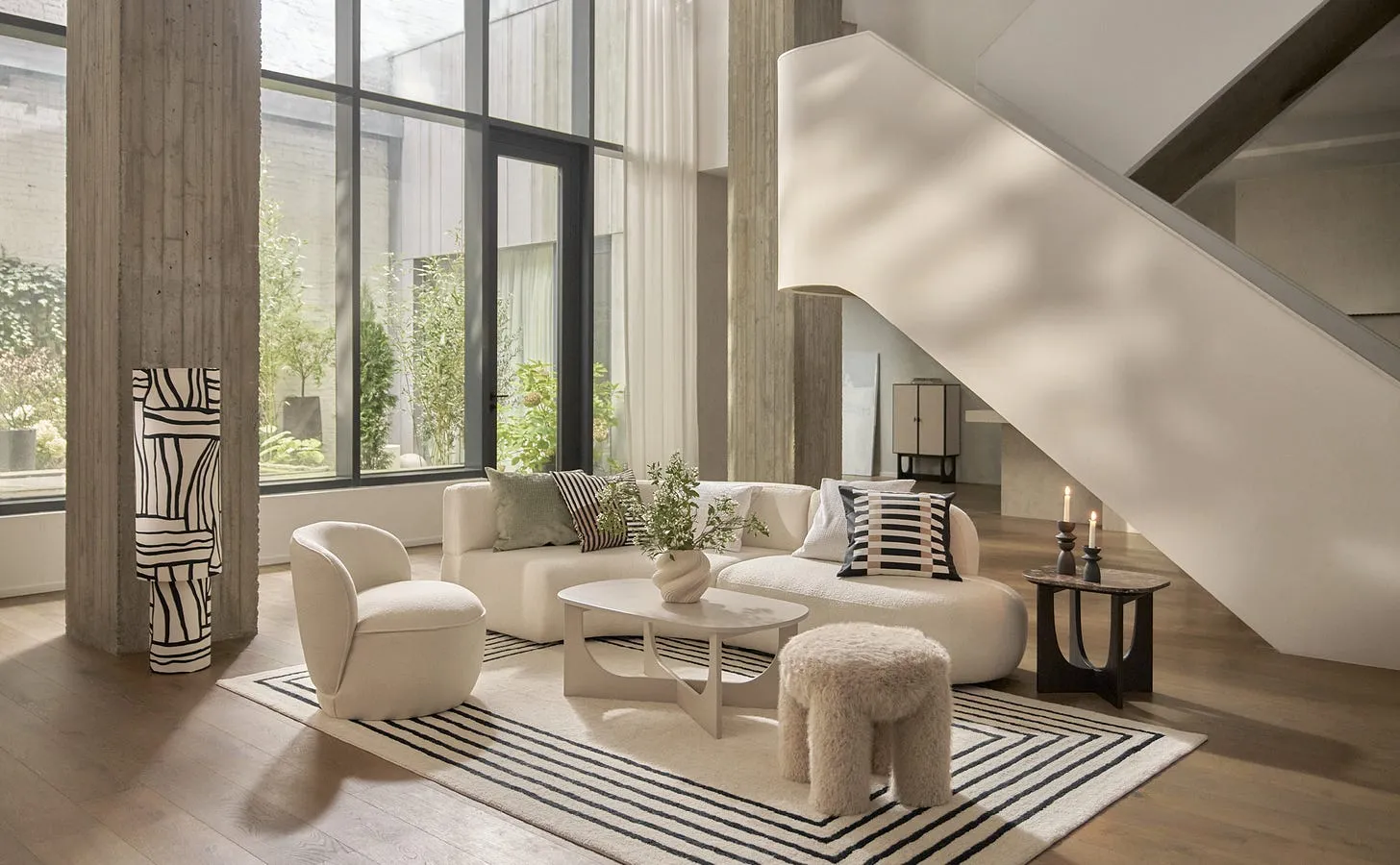
Beige linen sofa, travertine coffee table, boucle seating, and a textured rug beneath it all. Over the past few years, high-end spaces have converged on a warm, minimalist, or quiet luxury aesthetic. The work of taste is inherently uncertain, so external validators—what everyone likes, what costs more, or what few people know—become appealing substitutes for the more complex work of looking and thinking.
We need to open the door to doubt on what we’re seeing and why.
Our Insurance Policies Against Arguing Design
There’s no need to defend why travertine coffee tables and boucle seating appeal to you because thousands of people have liked a nearly identical image on their Instagram. If it costs more, then it’s even easier: impeccable craftsmanship and quality materials signal refinement, so you never have to articulate what makes something good beyond the tag, numbers, or country of origin. Likewise, vintage dealers hawking Mies van der Rohe and Marcel Breuer chairs let you signal sophistication without requiring an explanation of why their tubular steel designs matter or what they contribute to a space beyond their recognizability and scarcity.
Instead of examining concrete floors and considering the implications of industrial materials in a domestic space, we point to external validators and let them think. The object becomes secondary to its validation, absolving us of the risk of being wrong about it.
They Called It Minimalism. Here’s What That Word Used to Mean.
Russian Constructivists, after the 1917 Revolution, rejected decorative art in favor of industrial materials that could serve the masses. Alexander Rodchenko designed everything from worker overalls to beer advertisements, using stark geometric forms meant for mass production. Decades later, Donald Judd used cheap mill aluminum from hardware stores for his ‘100 untitled works.’ If the materials were platinum instead, the meaning would change completely; his work would become carriers of wealth rather than objects that transform your perception of the everyday.
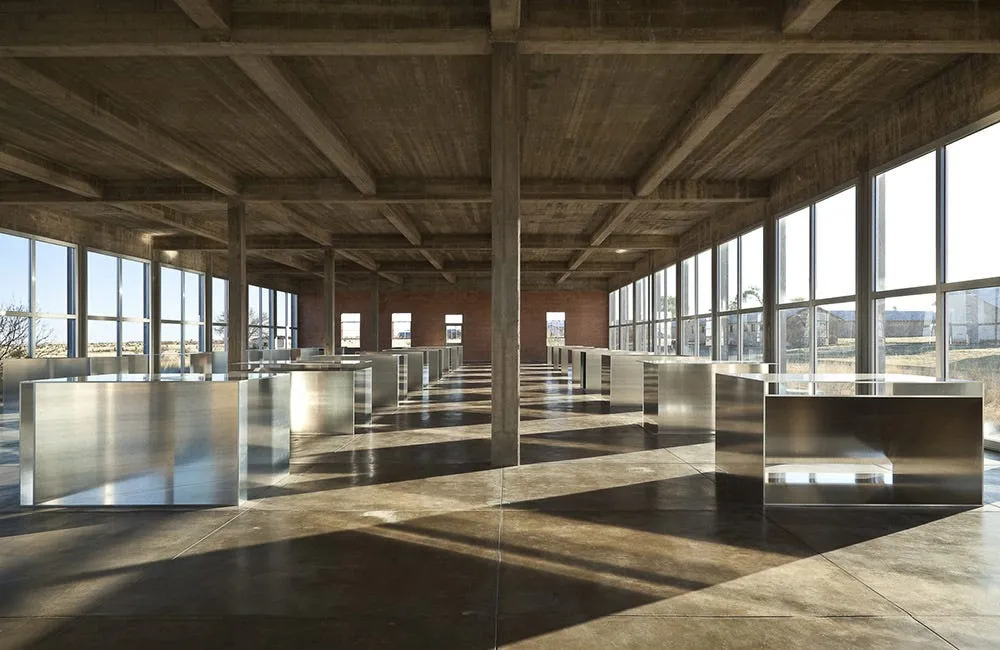
These movements were making arguments about what materials and forms could achieve, discussing consciousness, accessibility, and what design should do in the world. Now we use the same aesthetic vocabulary—minimalism, clean lines, essential forms—but we’ve gutted it of argument. The concrete floor that once signaled industrial egalitarianism now signals expensive taste. The “minimalist” interior has nothing to do with accessibility or consciousness. It’s now another way to avoid being wrong.
The “Timeless” Excuse
Everyone invokes timelessness, but what does that mean when trends cycle in months? “Timeless” does ideological work; it’s a way to avoid admitting we’re following fashion while, in fact, we are. When quiet luxury promised to “end all this chaotic irony” and let people “feel at ease in their beige apartments,” it was offering a different kind of insurance: temporal insurance. If it’s timeless, it can’t be criticized as trendy.
Historical minimalists weren’t interested in transcending time. Take Rodchenko, who was trying to transform consciousness in his time, using the materials available to him, rather than promoting his design above mortality.
Design is Not a Pendulum
Designers now diagnose the problem correctly. The trend forecasts discuss a “collective yearning for authenticity” and highlight the “sustained trend of beige and bland homes.” Popular media cycles through predictions of “bold maximalism” or an “Art Deco revival,” as if design is simply a pendulum that will swing the other way.
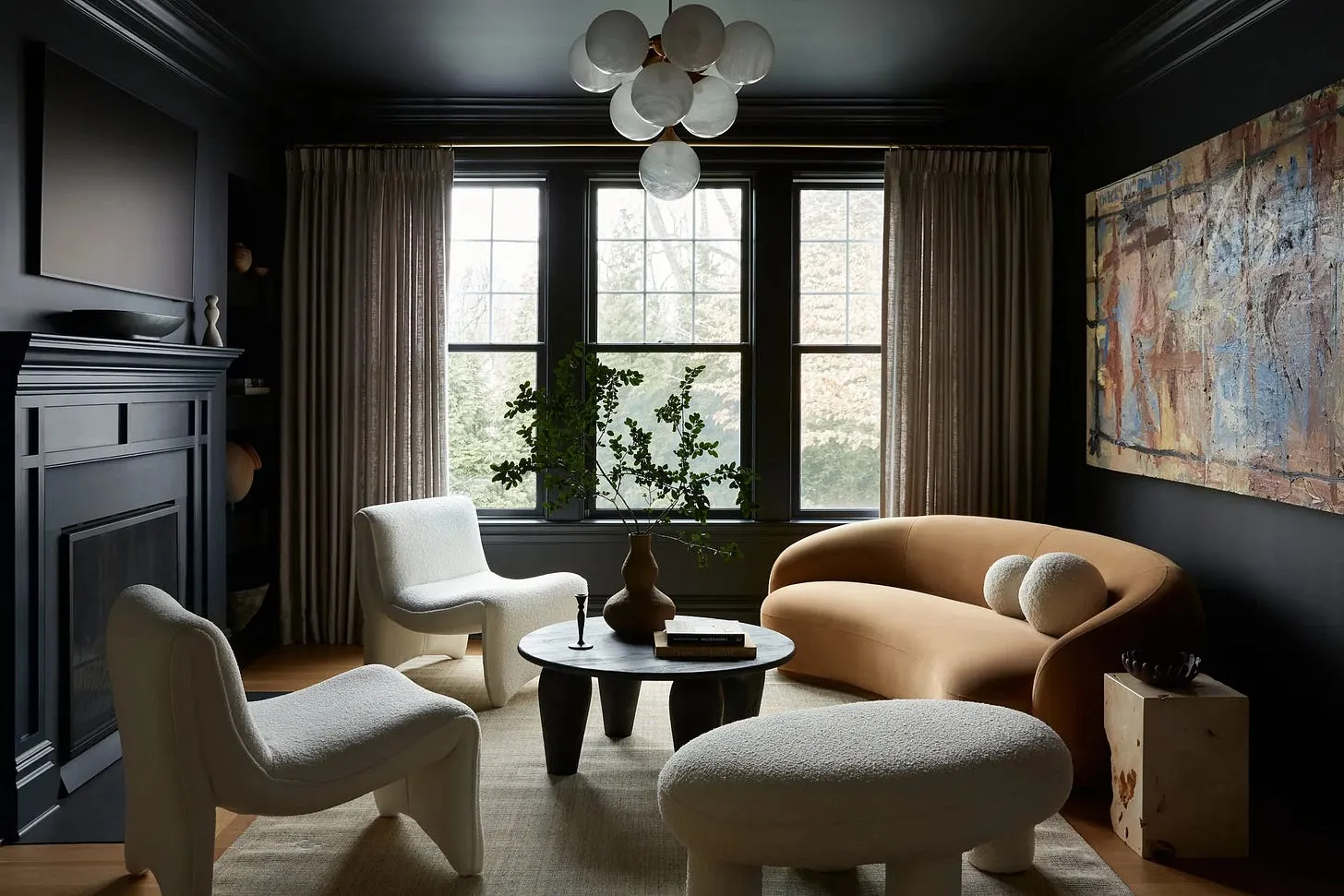
But the prescribed solutions—Art Deco revival, bold maximalism, statement pieces, “remixed eclecticism”—are excuses to shop our way out, not think our way out. Where quiet luxury offered safety through expensive neutrality, the next aesthetic offers safety through curated boldness. In the end, you swap one devil for another.
Stop, Look, Listen, One More Time
Aesthetic judgment isn’t about necessity or expertise, and it’s definitely not about getting it right. If you can’t fully justify a choice, but you can argue it and defend it—not because it’s validated by likes or price or obscurity, but because you looked at it and thought about what it might mean in your space, in your life—that might just be everything.